
For some people the moment is unmistakable — a sharp, catching pain in the lower back during something completely routine that leaves them unable to stand up straight or take a full breath without wincing. For others it is a gradual progression — weeks or months of deepening low back pain that eventually becomes a burning, electric sensation radiating down the leg that no position, no stretch, and no amount of ibuprofen seems to touch.
However it arrives, a herniated disc has a way of making itself impossible to ignore — and yet somehow, many of the patients who walk through our door have been managing it for far longer than they should have, trying approaches that haven't worked for reasons nobody has taken the time to explain.
A herniated disc is one of the most frequently overtreated and undertreated conditions in modern healthcare simultaneously — overtreated with surgery when conservative care could have succeeded, and undertreated with generic protocols that fail to address the specific mechanical and structural causes driving the patient's symptoms. The right approach is neither of those things. It is a thorough evaluation, a precisely designed treatment plan, and a conservative care strategy that gives the disc and the surrounding neural structures what they need to heal.
At CORE Chiropractic's Memorial City location at 10497 Town and Country Way, Suite 100, herniated disc treatment is one of our most specialized areas of care — and one where the outcomes we achieve for the professionals and families of west Houston consistently demonstrate what is possible when this condition is approached with precision rather than protocol.
What Is a Herniated Disc and What Is Actually Happening in Your Spine?
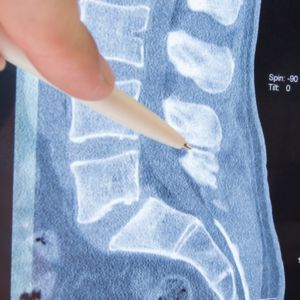
The intervertebral discs are the shock-absorbing cushions positioned between each vertebra of the spine — structures designed to distribute compressive forces, allow spinal movement, and protect the nerve roots that exit the spinal canal at every level.
Each disc has two components: a tough, fibrous outer ring called the annulus fibrosus, and a soft, gel-like inner core called the nucleus pulposus. In a healthy disc the nucleus remains contained within the annulus, deforming slightly under load and returning to its normal shape when the load is removed.
A herniated disc occurs when the outer annulus weakens, cracks, or tears — allowing the inner nucleus to push against the outer wall, bulge beyond it, or extrude through it entirely. When the herniated material contacts or compresses a nerve root exiting the spinal canal, the result is the distinctive pattern of localized spine pain combined with radiating symptoms — pain, burning, tingling, numbness, or weakness traveling into the area supplied by the compressed nerve — that makes disc herniations one of the most acutely debilitating spinal conditions a patient can experience.
In the lumbar spine, herniations occur most commonly at L4-L5 and L5-S1 — the lowest lumbar segments that bear the greatest mechanical load and accumulate the most stress over time. Herniations at these levels typically involve the nerve roots that form the sciatic nerve, producing the radiating pain down the buttock and leg that most people recognize as sciatica. In the cervical spine, herniations most commonly occur at C5-C6 and C6-C7 — compressing the nerve roots that supply the shoulder, arm, and hand and producing the radiating arm pain and hand tingling that is frequently misattributed to a shoulder problem.
Knowing precisely which disc is herniated, in which direction, and how that correlates with the specific pattern of the patient's symptoms is the foundation of effective herniated disc treatment — and it is the kind of precise, individualized understanding that every Memorial City patient receives at their first visit with us.
What Causes a Herniated Disc — And Why Memorial City Professionals Are at Elevated Risk
Disc herniations are almost never random events. They are the endpoint of a process that has been building over months or years — a progressive structural weakening of the annulus fibrosus under cumulative mechanical stress until the disc finally reaches the threshold of failure. Understanding the process explains both why the herniation occurred and what needs to change to allow healing and prevent recurrence.
The primary occupational driver in the Memorial City professional population is the same one we see across all of our Houston locations — prolonged sitting with a flattened lumbar lordosis. When you sit with inadequate lumbar support and a posteriorly tilted pelvis, the anterior vertebral bodies compress and the posterior disc space opens, pushing the nucleus posteriorly within the annulus. Under normal circumstances this is a transient mechanical event that resolves with standing and movement. Under the conditions of eight or more hours of daily sustained sitting that defines the workday of the professionals in the Air Liquide Center towers, the Murphy Building, the CityCentre campus along Town and Country Boulevard, and the corporate offices throughout the 77024 zip code, this posterior nuclear migration becomes a chronic mechanical reality that progressively weakens the posterior annulus over time.
The I-10 commute is a significant compounding factor that is specific to the Memorial City and Energy Corridor patient population and consistently underappreciated as a contributor to disc herniation risk. The Katy Freeway is one of the most congested stretches of highway in the United States — and the professionals commuting into Memorial City from the surrounding neighborhoods spend meaningful portions of their day in sustained lumbar flexion combined with the vibration and impact forces of stop-and-go traffic. Research consistently identifies this combination as a significant accelerant of disc degeneration and a meaningful risk factor for herniation. A west Houston professional who sits at a desk for eight hours and then sits in Katy Freeway traffic for ninety minutes each way is spending the majority of their day in the exact mechanical environment most likely to produce or worsen a disc herniation.
Prior uncorrected lumbar subluxations are another major contributor. When the vertebrae above and below a disc are chronically misaligned, the compressive forces on that disc are asymmetrical — loading one portion of the annulus disproportionately and creating a localized structural weakness that accumulates over time until the disc fails. This explains why many Memorial City patients report that their herniation occurred during something completely unremarkable — bending to pick something up, getting out of a car, reaching across a desk. The disc was already structurally compromised. The ordinary movement was simply the final straw.
We also see a strong contingent of herniated disc patients from the active residential neighborhoods surrounding Memorial City — Memorial, Spring Branch, Hedwig Village, Bunker Hill Village, and Piney Point Village — whose herniations involve a significant recreational and athletic component alongside the occupational factors. The fitness-oriented west Houston population engages in CrossFit, golf, swimming, running, and recreational sports at high rates — activities that accelerate the disc weakening that desk work and commuting initiate, and that frequently produce the acute herniation event that finally demands attention.
How CORE Chiropractic Treats Herniated Discs at Our Memorial City Location
Every herniated disc patient at CORE Chiropractic - Memorial City begins with a comprehensive evaluation that establishes precisely what we are dealing with before any treatment is recommended. That means a detailed consultation covering your full symptom history, a thorough orthopedic and neurological examination identifying which nerve roots are involved and assessing the integrity of the affected disc, and standing digital X-rays taken in our on-site imaging suite.
Those weight-bearing X-rays evaluate the alignment of the lumbar vertebrae, the disc height at each affected level, and the structural factors that contributed to the herniation — essential information for designing a care plan that addresses both the disc and its causes. If you have had prior MRI imaging we incorporate those findings into the evaluation — they provide additional detail about the nature and extent of the herniation that helps us confirm conservative care is appropriate for your specific presentation and refine the treatment approach accordingly.
For most herniated disc patients at our Memorial City location the treatment plan draws from the following:
Non-Surgical Spinal Decompression Therapy
Spinal decompression therapy is the cornerstone of herniated disc treatment at CORE Chiropractic - Memorial City. By gently and precisely distracting the affected lumbar segments under carefully controlled tension, decompression creates negative intradiscal pressure — a vacuum effect within the disc space that encourages the herniated nuclear material to retract away from the nerve root it is compressing. Simultaneously the decompression force draws nutrients, oxygen, and hydration back into the degenerated disc space, supporting the disc's capacity for repair and reducing the inflammatory environment surrounding the affected nerve root.
Most patients find decompression sessions deeply relaxing — the tension is applied gradually and the body's response is typically one of relief rather than discomfort. The cumulative therapeutic effect over a series of sessions is profound for herniations that have not responded to other conservative approaches, and for many Memorial City patients it produces the relief they had been told required surgery to achieve.
Chiropractic Adjustments
Precise chiropractic adjustments to the lumbar spine and pelvis complement the decompression therapy by correcting the vertebral misalignments that contributed to the abnormal disc loading in the first place. Restoring proper alignment and movement to the segments above and below the herniated disc reduces the asymmetrical compressive forces that were accelerating the disc's structural breakdown and creates the mechanical environment in which decompression therapy can be most effective. Our doctors use adjustment techniques specifically adapted for herniated disc presentations — carefully protecting the disc while correcting the surrounding segmental dysfunction that contributed to its failure.
PEMF Therapy
For herniated disc patients with significant nerve inflammation, chronic radicular pain, or persistent burning and tingling in the leg indicating ongoing nerve root irritation, PEMF therapy at our Memorial City location provides targeted cellular-level support. By reducing inflammation in the tissues surrounding the herniated disc and the affected nerve root, improving local circulation, and supporting the neurological repair process, PEMF addresses the physiological environment of the herniation in ways that mechanical treatment alone cannot replicate — particularly valuable for patients whose nerve symptoms have been present long enough to involve a degree of neurological sensitization.
HEIT Therapy
For patients with advanced disc degeneration alongside the herniation, significant nerve involvement from prolonged compression, or herniations that have been present and symptomatic for an extended period without adequate treatment, HEIT therapy at our Memorial City location provides a deeper level of electromagnetic tissue stimulation than conventional PEMF. The powerful electromagnetic field generated by HEIT penetrates deeply into the affected disc and surrounding neural structures, driving cellular repair at a level that other conservative therapies cannot match. For the Memorial City patient who has been managing significant disc-related pain for months without meaningful progress, HEIT frequently provides the additional therapeutic depth that allows the healing process to finally move forward.
Lumbar Rehabilitation and Core Stabilization
Effective herniated disc treatment does not end when the acute pain resolves. The muscular support system of the lumbar spine — the deep core stabilizers, multifidus, gluteal muscles, and hip flexors — is almost universally weakened in herniated disc patients, both from the injury itself and from the protective movement avoidance patterns that develop around significant spinal pain. Rebuilding this muscular support through specific, progressive rehabilitation exercises is essential to preventing recurrence — because a disc that has herniated once has demonstrated a structural vulnerability that requires active muscular protection going forward. For the active Memorial City patient whose disc herniation has a recreational or athletic component, we progress rehabilitation specifically toward the demands of their sport or activity rather than stopping at a generic baseline that doesn't reflect what they actually need their spine to do.
Postural Correction and Ergonomic Guidance
For the Memorial City professional whose disc herniation developed in the context of sustained desk work and a long I-10 commute, returning to the same mechanical environment without modification is a reliable path back to the same problem. We provide specific, practical guidance on workstation setup, lumbar support, sitting mechanics, and driving posture adjustments for the Katy Freeway commute — protecting the therapeutic gains made in the office throughout the patient's daily life and reducing the daily mechanical load on the disc as it heals.
Non-Surgical Herniated Disc Treatment — Why Conservative Care Should Come First
One of the most important conversations we have with herniated disc patients at our Memorial City location is about surgery — because a meaningful number of them arrive having already been told that surgery is their best or only option, and the evidence on this topic tells a more nuanced story than that recommendation typically reflects.
The natural history of lumbar disc herniations is genuinely favorable for the majority of patients. Research consistently demonstrates that herniated disc material resorbs over time as the body's immune system processes and removes the extruded nuclear material — a process that is meaningfully accelerated by the improved disc nutrition and hydration that spinal decompression therapy creates. Studies following herniated disc patients treated with conservative care show high rates of significant clinical improvement and measurable reduction in herniation size on follow-up imaging — outcomes that challenge the premise that the herniated disc is a permanent structural problem requiring surgical correction.
Surgery for lumbar disc herniation is appropriate in specific clinical situations — when progressive neurological deficits are present, when cauda equina syndrome develops, or when a genuinely adequate trial of properly delivered conservative care has failed to produce improvement. For the vast majority of herniated disc patients, the appropriate first step is a thorough, well-designed trial of conservative care — and that is precisely what we provide at CORE Chiropractic - Memorial City.
We will tell you honestly at your report of findings appointment what we believe conservative care can achieve for your specific presentation. If your condition requires surgical consultation we will tell you directly and help facilitate that referral without hesitation. What we will not do is recommend surgery before the right conservative approach has been properly applied.
What to Expect at Your First Herniated Disc Appointment
If you have been living with the pain of a herniated disc — recently diagnosed or long-suspected — and you want an evaluation that actually explains what is happening in your spine and what can realistically be done about it, here is exactly what your first visit at CORE Chiropractic - Memorial City looks like.
Your first appointment begins with a detailed consultation covering the complete history of your disc problem — onset, progression, the specific pattern and behavior of your symptoms, what makes the pain better or worse, what you have already tried, and any prior imaging or diagnoses you have received. The specific behavior of disc symptoms — which movements aggravate the leg pain versus the back pain, which positions provide relief, how the symptoms have evolved over time — provides diagnostic information that is as important as any imaging.
From there we conduct a thorough orthopedic and neurological examination assessing lumbar range of motion, disc provocation tests, neurological function in the lower extremities, and the specific reflex and muscle strength patterns that identify which nerve roots are involved. We then take standing digital X-rays to evaluate the structural alignment of your lumbar spine and pelvis under load.
At your report of findings appointment — typically within one to two days — your doctor presents a complete picture of what we found, explains in plain language exactly what is happening with your disc, and walks you through a specific treatment plan with realistic timelines and honest expectations. You will leave that appointment with a genuine understanding of your condition and a genuine plan to address it.
We verify your insurance benefits before your first visit so there are no financial surprises.
Serving Memorial City and the Surrounding Houston Neighborhoods
CORE Chiropractic's Memorial City location at 10497 Town and Country Way, Suite 100 is positioned to serve the professional and residential community of one of Houston's most dynamic west side corridors. We are minutes from the Air Liquide Center complex, the Murphy Building, CityCentre, and the corporate campuses lining the Katy Freeway between Beltway 8 and Bunker Hill Road. We are easily accessible from Interstate 10 and a short drive from the neighborhoods surrounding Memorial City in every direction.
We see herniated disc patients regularly from Memorial, Spring Branch, Hedwig Village, Bunker Hill Village, Piney Point Village, and the Energy Corridor to the west. Our scheduling accommodates the demands of a full professional calendar and the realities of west Houston commuting — early morning appointments, efficient visit structures, and same-week availability for new patients who are ready to understand what is happening in their spine and what conservative care can realistically achieve for them.
The neighborhoods we serve most frequently for herniated disc treatment include Memorial City, Memorial, Spring Branch, Hedwig Village, Bunker Hill Village, Piney Point Village, and the surrounding zip codes 77024, 77079, and 77055.
Frequently Asked Questions About Herniated Disc Treatment in Memorial City
Can a herniated disc heal without surgery?
Yes — and for the majority of lumbar disc herniations, it does. Research consistently shows that herniated disc material resorbs naturally over time and that conservative care including spinal decompression therapy, chiropractic adjustments, and targeted rehabilitation produces meaningful clinical improvement in the vast majority of cases. Surgery is appropriate in specific clinical situations but should not be the default first intervention for most herniated disc presentations. We will give you an honest, evidence-based assessment of what conservative care can achieve for your specific case at your report of findings appointment.
How long does it take for a herniated disc to heal?
Most patients begin noticing meaningful improvement within the first three to six weeks of consistent conservative care. Significant lasting relief — including measurable reduction in the herniation itself on follow-up imaging in many cases — typically requires eight to twelve weeks of dedicated treatment. The timeline depends on the severity and location of the herniation, how long it has been present, the degree of nerve compression involved, and how consistently the patient follows through with the care plan and home recommendations.
I have sciatica along with my herniated disc. Can you treat both?
Yes — and in most cases they are the same problem. Sciatica is the symptom produced when a herniated lumbar disc compresses one of the nerve roots forming the sciatic nerve. Treating the disc herniation effectively — through decompression therapy, chiropractic adjustments, and the supporting therapies we apply at Memorial City — addresses the source of the sciatic nerve compression and resolves the sciatica as the disc heals and the nerve root decompresses.
What is the difference between a herniated disc and a bulging disc?
A bulging disc describes a disc that has widened and expanded symmetrically beyond its normal boundary without the inner nucleus breaking through the outer annular wall — a contained protrusion representing an earlier stage of disc failure. A herniated disc involves an actual breach of the annular wall with the inner nuclear material pushing through — either still contained by the outermost layers or extruding beyond them entirely. Both conditions respond well to spinal decompression therapy and chiropractic care, though the specific treatment approach and expected timeline may differ based on the nature and extent of the disc failure.
Do you accept insurance for herniated disc treatment?
Yes. CORE Chiropractic - Memorial City is in-network with Medicare, Blue Cross Blue Shield, Aetna, Humana, Cigna, UnitedHealthcare, and ASHN. We verify your benefits before your first appointment and walk you through exactly what is and isn't covered so you can make a fully informed decision without any financial uncertainty.
You Were Told You Might Need Surgery. Get a Second Opinion First.
If you have been living with the pain of a herniated disc — and you have been told that surgery may be your best or only option — we would respectfully ask you to come in for an evaluation before making that decision. CORE Chiropractic Memorial City has same-week appointments available, and your first visit includes a full consultation, comprehensive neurological examination, and standing digital X-rays so you leave with a complete picture of your condition and an honest assessment of what conservative care can achieve for you specifically.
We are right off Town and Country Way with easy access from I-10. The decision about surgery deserves a thorough conservative evaluation first.
CORE Chiropractic - Memorial City 10497 Town and Country Way, # 100 Houston, TX 77024 Phone: (713) 770-6990
Serving Memorial City · Memorial · Spring Branch · Hedwig Village · Bunker Hill Village · Piney Point Village · Energy Corridor