
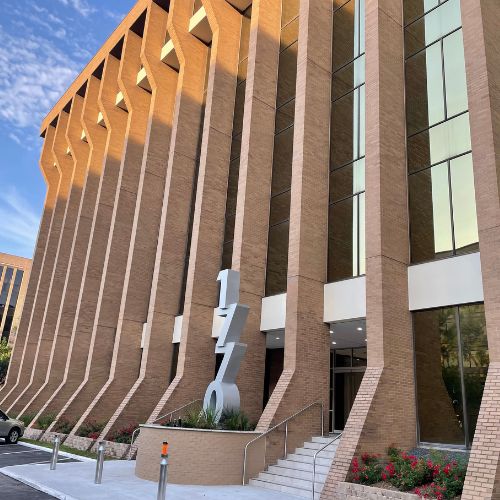
Serving patients in the Galleria, Uptown Houston, River Oaks, Tanglewood, Briargrove, and the surrounding areas of West Houston.
If you're dealing with sharp, shooting pain that travels from your lower back down through your buttock and into your leg — or a burning, tingling, or numbness that runs down one side — you're likely experiencing sciatica.
It's one of the most disruptive pain conditions we treat at CORE Chiropractic – Galleria, and one of the most successfully resolved with the right diagnosis and care plan.
What Is Sciatica?
The sciatic nerve is the longest nerve in the body, running from the lower lumbar spine through the buttock and down the back of each leg to the foot. When this nerve becomes compressed or irritated — most commonly at the lumbar spine or in the piriformis muscle of the hip — it produces the characteristic pain pattern most people recognize as sciatica.
Sciatica is not a diagnosis in itself. It's a symptom of an underlying structural problem in the lumbar spine or pelvis. At CORE Chiropractic – Galleria, we identify exactly what is compressing the sciatic nerve and treat that cause directly — rather than managing the leg pain in isolation.
Common Symptoms of Sciatica We Treat
- Sharp, shooting pain traveling from the lower back or buttock down the back of one leg, sometimes reaching the calf or foot
- Burning or electric pain along the sciatic nerve pathway, often described as a hot wire running down the leg
- Numbness or tingling in the leg, calf, or foot on one side
- Weakness in the leg or foot that makes walking, standing, or climbing stairs difficult
- Pain that worsens with sitting — particularly after long periods at a desk or behind the wheel, which is extremely common among Galleria-area professionals
- Pain that eases when walking or lying down but returns immediately upon sitting again
- One-sided symptoms — true sciatica almost always affects only one leg at a time
If any of these describe your pain, a lumbar spine evaluation at CORE Chiropractic – Galleria is the logical next step.
What Causes Sciatica?

Sciatica always has a structural cause. The most common sources we identify at our Galleria office include:
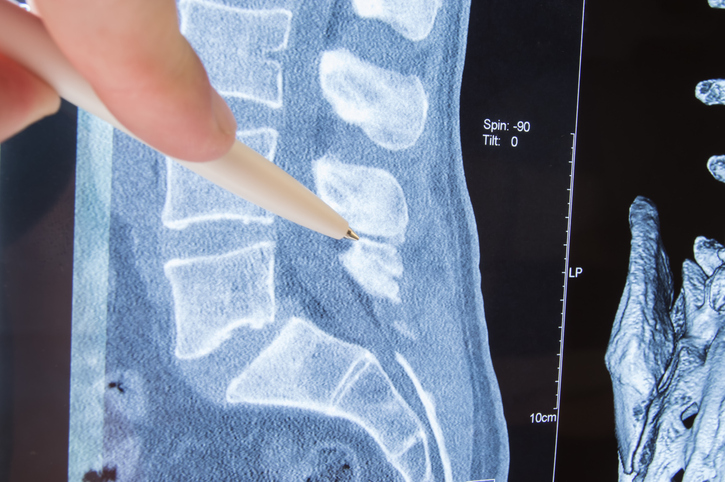
Lumbar disc herniation or bulge — A herniated or bulging disc in the lower lumbar spine (most commonly L4–L5 or L5–S1) is the leading cause of true sciatica. When disc material presses against the nerve root, it produces the radiating leg pain pattern most patients recognize immediately. This is the most common presentation we treat and responds very well to lumbar decompression therapy combined with specific chiropractic adjustment.
Lumbar joint restriction and vertebral misalignment — Restricted or misaligned lumbar vertebrae narrow the space through which the nerve roots exit the spine, creating compression and irritation along the sciatic nerve pathway.
Degenerative disc disease — As disc height decreases over time, the foraminal openings where nerve roots exit the spine narrow progressively. This is a common finding in our Galleria patients in their 40s and 50s and responds well to decompression therapy.
Spinal stenosis — Narrowing of the spinal canal itself puts pressure on the nerve roots and can produce bilateral or alternating sciatica-like symptoms, particularly with prolonged standing or walking.
Piriformis syndrome — The sciatic nerve passes directly beneath — and in some people, through — the piriformis muscle in the hip. When this muscle becomes chronically tight or inflamed, it can compress the sciatic nerve and mimic lumbar-driven sciatica. This is frequently aggravated by prolonged sitting, making it particularly common in desk workers.
Sacroiliac joint dysfunction — SI joint irritation can refer pain into the buttock and upper leg in a pattern that closely resembles sciatica. Accurate diagnosis distinguishes this from lumbar nerve root compression and directs the appropriate treatment.
Note: Sciatica accompanied by loss of bladder or bowel control, progressive leg weakness, or numbness in the groin or inner thigh requires emergency medical evaluation. CORE Chiropractic – Galleria conducts a thorough intake and neurological exam and will refer out immediately if any red flags are identified.
How We Treat Sciatica at CORE Chiropractic – Galleria
Sciatica treatment at our Galleria office is built around your specific exam findings and x-ray results — not a one-size-fits-all protocol. For most sciatica patients, treatment involves a combination of the following:
Specific chiropractic adjustment — We use x-ray analysis and specific chiropractic technique to identify exactly which lumbar vertebrae are misaligned and in which direction before performing any adjustment. Each vertebra can move out of alignment in up to 16 different ways — knowing the precise direction allows us to adjust correctly and avoid aggravating an already irritated nerve root. We use diversified technique, drop table, and Activator adjustments depending on your presentation and comfort level.
Lumbar decompression therapy — For sciatica patients with disc herniation, disc bulge, degenerative disc disease, or spinal stenosis, lumbar decompression is one of the most effective non-surgical treatments available. The therapy gently stretches the lumbar spine along the y-axis, creating separation between the vertebrae and reducing pressure on the compressed disc and nerve root. Sessions run 10 minutes using one of 21 protocols selected based on your condition and x-ray findings. For patients whose sciatica is running down only one leg, we can direct the pull to one side to specifically open the affected side of the vertebral joint. We typically begin decompression at a lighter pull and increase the strength progressively over follow-up sessions.
PEMF therapy (Pulsed Electromagnetic Field) — We use the Pulse Pro from Pulse Centers to reduce inflammation around the compressed nerve root and disc tissue prior to or alongside decompression therapy. PEMF is particularly valuable for sciatica patients with significant disc inflammation, as calming that inflammation makes decompression therapy more comfortable and more effective from the first session. Most patients also report sleeping better following PEMF sessions — meaningful for sciatica sufferers whose pain disrupts sleep. Note: patients with pacemakers or implanted electronic devices cannot use this therapy.
Leg length discrepancy evaluation — One frequently overlooked contributor to chronic sciatica and recurring lumbar problems is an anatomical leg length difference. If your legs are different lengths, your pelvis tilts to compensate, placing chronic asymmetrical load on the lumbar spine and sacroiliac joint — directly feeding the nerve compression that drives sciatica. We evaluate for leg length discrepancy as part of our initial x-ray analysis. If findings suggest an anatomical difference, we perform a dedicated leg length x-ray using a calibrated ruler to precisely measure the femur and tibia of each leg. Correcting a leg length discrepancy doesn't just help sciatica — it removes a structural imbalance that would otherwise continue to undermine your spinal alignment regardless of how many adjustments you receive.
Intersegmental traction (roller bed) — This therapy delivers rhythmic motion through the lumbar spine, exercising the spinal joints and promoting fluid exchange in the disc tissue. It is particularly useful for preparing the lumbar spine before adjustment and decompression, and most patients find it one of the most comfortable parts of their visit.
Electrical stimulation — For patients in the acute phase of a sciatica flare-up, we use electrical stimulation combined with ice to reduce lumbar inflammation and muscle spasm. This is typically used during the first few visits while pain is at its most severe, creating a more comfortable baseline from which decompression and adjustment can proceed.
What to Expect at Your First Low Back Pain Appointment
Step 1 — Sciatica history and intake
We document your pain pattern in detail — where it starts, where it travels, what makes it better or worse, how long it has been present, and whether any prior treatment has been attempted. The specific distribution of your leg pain is one of the most diagnostic pieces of information we collect.
Step 2 — Lumbar spine and neurological examination
We assess lumbar range of motion, joint mobility, muscle strength, and reflexes. Orthopedic tests including straight leg raise, Kemp's test, and seated piriformis testing help identify the structural source and level of nerve involvement.
Step 3 — Digital X-rays with measurement analysis
We take precise measurements of your lumbar spine to identify misalignment direction, disc height loss, and degenerative changes — going well beyond the fracture-and-pathology screening that most offices perform. Initial x-rays are included at no additional charge.
Step 4 — Report of findings and care plan
We walk you through exactly what we found, what is compressing your sciatic nerve, and the recommended treatment plan — including visit frequency, expected timeline, and realistic outcome goals. No vague open-ended plans.
Step 5 — First treatment (not performed the same day in most cases)
Most sciatica patients begin treatment on their follow up visit, after we've had an opportunity to evaluate their x-rays and examination findings. Many notice a meaningful reduction in leg pain and lumbar tension within the first few visits once decompression and adjustment are underway.
Serving the Galleria District and the Surrounding Houston Neighborhoods
CORE Chiropractic – Galleria at 1770 Saint James Place, Suite 210 is positioned at the center of one of Houston's most professionally and residentially vibrant districts — minutes from the Williams Tower, the Galleria Office Towers, Four Oaks Place, and the corporate campuses lining Post Oak Boulevard and San Felipe Street, and a short drive from the residential communities of Tanglewood, River Oaks, Briargrove, and Memorial.
We see sciatica patients regularly from across the Galleria district and the surrounding communities — professionals working in the towers and firms of Uptown Houston, residents of Tanglewood, River Oaks, Briargrove, and Memorial, and patients from throughout the 77056, 77057, and 77027 zip codes. Our scheduling accommodates the demands of a full professional calendar — early morning appointments, efficient visit structures, and same-week availability for new patients who are ready to address their sciatica rather than simply manage it.
The neighborhoods we serve most frequently for sciatica treatment include the Galleria, Tanglewood, River Oaks, Briargrove, Memorial, Uptown Houston, and the surrounding zip codes 77056, 77057, and 77027.
Frequently Asked Questions About SCIATICA Treatment at Our Galleria Location
Can chiropractic care actually fix sciatica?
For sciatica driven by lumbar disc herniation, vertebral misalignment, or joint restriction — which covers the majority of cases — yes. Specific chiropractic adjustment combined with lumbar decompression therapy addresses the structural compression causing the nerve irritation. This is not pain management; it is treatment of the cause. Results depend on the severity of the disc involvement and how long the condition has been present, but most patients see meaningful improvement within the first several weeks of consistent care.
How is this different from just resting or taking anti-inflammatories?
Rest and anti-inflammatories reduce symptoms temporarily but do nothing to address the disc herniation, joint restriction, or misalignment compressing the nerve. Without correcting the structural cause, sciatica typically returns — and often worsens over time. Our approach is to reduce inflammation with PEMF and electrical stimulation where needed, then correct the underlying structural problem with adjustment and decompression.
How many visits will I need?
Most sciatica patients with disc involvement are on an initial care plan of 12–24 visits over 6–12 weeks. Acute cases with recent onset often resolve faster. Chronic cases with significant disc degeneration may require a longer initial phase. We'll give you a clear timeline at your report of findings.
Is lumbar decompression safe?
Yes, for most patients. We review your history, symptoms, and x-rays before recommending decompression. Patients who have had lumbar surgery within the last 12 months or who have hardware implanted in their lumbar spine are not candidates. Our decompression unit has a 300 lb weight limit.
Do you accept insurance for sciatica treatment?
Yes. CORE Chiropractic is in-network with most major insurance plans including Blue Cross Blue Shield, Aetna, Cigna, and UnitedHealthcare. Our team verifies your chiropractic benefits before your first visit so there are no billing surprises.
Where is CORE Chiropractic – Galleria located?
CORE Chiropractic – Galleria is located at 1770 Saint James Place #210, Houston, TX 77056 — just off the 610 Loop near the Galleria mall, convenient to River Oaks, Tanglewood, Briargrove, and Uptown Houston. On-site parking is available. Call us at (713) 622-3300 to schedule or confirm hours.
Book Your Sciatica Evaluation at CORE Chiropractic – Galleria
Sciatica that goes untreated tends to get worse, not better. The longer the nerve root remains compressed, the more difficult recovery becomes. If you've been pushing through leg pain, numbness, or that burning sciatic nerve sensation — it's time to find out exactly what's causing it and whether we can fix it.
CORE Chiropractic - Galleria 1770 Saint James Place, # 210 Houston, TX 77056 Phone: (713) 622-3300
Serving the Galleria · Tanglewood · River Oaks · Briargrove · Memorial · Uptown Houston