
For some people it arrives all at once — a sharp, sudden pain in the lower back during something completely ordinary, like picking up a bag or turning to look over a shoulder, that leaves them unable to stand up straight. For others it builds slowly over months — a deepening ache in the back that eventually becomes a burning, radiating pain traveling down the leg that no position seems to relieve.
Either way, by the time most patients with a herniated disc walk through our door, they have usually been dealing with significant pain for longer than they should have and trying things that haven't worked for reasons nobody has adequately explained.
A herniated disc is one of the most mismanaged conditions in modern healthcare — not because the diagnosis is wrong, but because the treatment response so frequently defaults to pain management and surgical referral before conservative care has been given a genuine opportunity to produce results. The research on this is clear: the majority of lumbar disc herniations respond well to properly delivered conservative care. Most patients do not need surgery. What they need is the right evaluation, the right treatment, and the right provider.
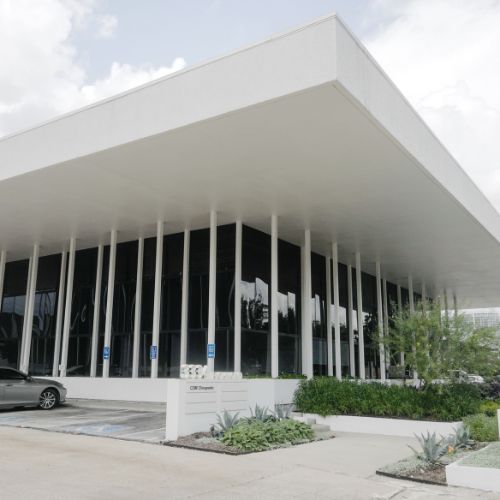
At CORE Chiropractic's Greenway Plaza location at 3334 Richmond Avenue, Suite 107, herniated disc treatment is one of our most specialized areas of care — and one where our outcomes consistently demonstrate what is possible when the condition is approached with precision rather than protocol.
What Is a Herniated Disc and What Is Actually Happening in Your Spine?
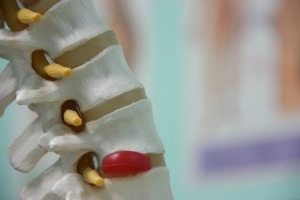
The intervertebral discs are the shock-absorbing cushions that sit between each vertebra of the spine. Each disc has two components — a tough, fibrous outer ring called the annulus fibrosus, and a soft, gel-like inner core called the nucleus pulposus. In a healthy disc, the nucleus stays contained within the annulus, distributing compressive forces evenly and allowing the spine to move with flexibility and control.
A herniated disc — also called a slipped disc, ruptured disc, or disc prolapse depending on the clinical context — occurs when the outer annulus weakens or tears and the inner nucleus pushes through, either bulging against the outer wall or extruding beyond it entirely.
When this herniated material contacts or compresses a nearby nerve root, the result is the characteristic pattern of pain, burning, tingling, numbness, and weakness that makes disc herniations one of the most acutely debilitating spinal conditions a patient can experience.
In the lumbar spine, disc herniations most commonly occur at L4-L5 and L5-S1 — the two lowest lumbar segments that bear the greatest mechanical load and are subjected to the most cumulative stress over time. A herniation at these levels typically compresses one of the nerve roots that forms the sciatic nerve, producing the radiating pain pattern down the buttock, leg, and foot that most people know as sciatica. Herniations in the cervical spine — most commonly at C5-C6 and C6-C7 — compress nerve roots that supply the shoulder, arm, and hand, producing the radiating arm pain, tingling, and weakness that is frequently mistaken for a shoulder problem.
Understanding exactly which disc is herniated, how significantly, and in which direction — and how that correlates with your specific symptom pattern — is the foundation of effective herniated disc treatment. This is why the evaluation we perform at CORE Chiropractic Greenway Plaza goes significantly deeper than a brief assessment before beginning treatment.
What Causes a Herniated Disc — And Why Greenway Plaza Professionals Are at Elevated Risk
Disc herniations rarely happen in isolation. They are almost always the endpoint of a process that has been building for months or years — a progressive weakening of the annulus fibrosus under accumulated mechanical stress until the disc finally reaches the threshold of failure. Understanding the process helps explain both why it happened and what needs to change to prevent recurrence.
The primary driver of disc herniation in the professional population is sustained spinal flexion loading — the mechanical environment created by prolonged sitting with a flattened lumbar lordosis. When you sit with your lower back unsupported and your pelvis tilted posteriorly, the anterior vertebral bodies compress and the posterior disc space widens, pushing the nucleus posteriorly within the disc.
Under normal circumstances this is a transient mechanical event that resolves when you stand and move. Under the conditions of eight or more hours of daily sustained sitting — which describes the typical workday of the professionals in the Greenway Plaza towers, the corporate offices along Richmond Avenue, and the firms throughout the 77046 and 77098 zip codes — this posterior nuclear migration becomes a chronic mechanical reality that progressively weakens the posterior annulus over time.
Add to this the Southwest Freeway commute — sustained lumbar flexion combined with vibration and impact forces from stop-and-go traffic on US-59, which research links directly to accelerated disc degeneration and increased disc herniation risk — and the Greenway Plaza professional is spending the majority of their day in the exact mechanical environment most likely to produce or worsen a disc herniation.
The process is also significantly influenced by prior subluxations in the lumbar spine that have never been corrected. When the vertebrae above and below a disc are misaligned, the compressive forces on that disc become asymmetrical — loading one portion of the annulus disproportionately and accelerating the localized weakening that eventually leads to herniation. This is why many patients who herniate a disc doing something completely ordinary — reaching for a coffee cup, putting on a shoe — report that nothing dramatic happened. The disc was already weakened. The ordinary movement was simply the final straw.
We also see disc herniation patients regularly from the residential neighborhoods surrounding the Greenway district — River Oaks, Upper Kirby, Montrose, and West University Place — whose herniations involve a greater recreational or athletic contribution alongside the occupational factors. Heavy lifting, high-impact exercise, and the cumulative demands of physically active lifestyles accelerate the disc weakening that desk work initiates — and the combination frequently produces the acute herniation event that finally brings a patient to our door.
How CORE Chiropractic Treats Herniated Discs at Our Greenway Plaza Location
The most important thing we do for every herniated disc patient at CORE Chiropractic - Greenway Plaza is understand precisely what we are dealing with before recommending any treatment. That means a detailed consultation covering your full symptom history, a thorough orthopedic and neurological examination that identifies which nerve roots are involved and assesses the integrity of the affected disc, and standing digital X-rays taken in our on-site imaging suite.
Those weight-bearing X-rays allow us to evaluate the alignment of the lumbar vertebrae, the disc height at each level, and the structural factors that contributed to the herniation — information that is essential for designing a care plan that addresses the cause as well as the disc itself. If you have had prior MRI imaging, we incorporate those findings into the evaluation — they give us additional detail about the herniation that X-rays alone cannot provide, and they help us confirm that your presentation is appropriate for conservative care before we begin.
For most herniated disc patients at our Greenway Plaza location the treatment plan draws from the following:
Non-Surgical Spinal Decompression Therapy
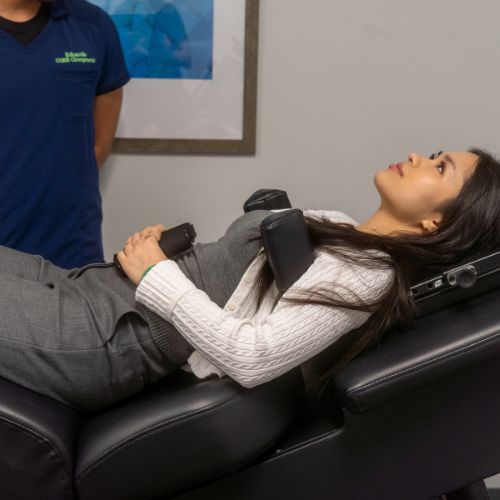
Spinal decompression therapy is the centerpiece of herniated disc treatment at CORE Chiropractic - Greenway Plaza — and for good reason. By gently and precisely distracting the affected lumbar segments under carefully controlled tension, decompression therapy creates negative intradiscal pressure — a vacuum effect within the disc space that encourages the herniated nuclear material to retract away from the nerve root it is compressing. Simultaneously, the decompression force draws nutrients, oxygen, and hydration back into the degenerated disc space, supporting the disc's capacity for repair and reducing the inflammatory environment surrounding the compressed nerve.
Most patients find decompression sessions deeply relaxing rather than uncomfortable — the tension is applied gradually and the body's response is typically one of relief rather than resistance. The cumulative effect over a series of sessions can be profound for disc herniations that have not responded to other conservative approaches, and for many patients it represents the intervention that finally produces the relief they had been told would require surgery to achieve.
Chiropractic Adjustments
Precise, targeted adjustments to the lumbar spine and pelvis complement the decompression therapy by correcting the vertebral misalignments that contributed to the abnormal disc loading in the first place. By restoring proper alignment and movement to the segments above and below the herniated disc, chiropractic adjustments reduce the asymmetrical compressive forces that were accelerating the disc's breakdown and create the mechanical environment in which decompression therapy can be most effective. Our doctors use techniques specifically appropriate for herniated disc presentations — the adjustment approach for a patient with an active disc herniation is carefully adapted to protect the disc while correcting the surrounding segmental dysfunction.
PEMF Therapy
For herniated disc patients dealing with significant nerve inflammation, chronic radicular pain, or the kind of persistent burning and tingling in the leg that indicates ongoing nerve root irritation, PEMF therapy at our Greenway Plaza location provides targeted support at the cellular level. By reducing inflammation in the tissues surrounding the herniated disc and the affected nerve root, improving circulation to the compressed structures, and supporting the neurological repair process, PEMF addresses the physiological environment of the herniation in ways that mechanical treatment alone cannot replicate.
HEIT Therapy
For patients with advanced disc degeneration alongside the herniation, significant nerve damage from prolonged compression, or herniations that have been present and symptomatic for an extended period without adequate treatment, HEIT therapy at our Greenway Plaza location provides a deeper level of electromagnetic tissue stimulation than conventional PEMF. The powerful electromagnetic field generated by HEIT penetrates deeply into the affected disc and surrounding neural structures, driving cellular repair at a level that conventional therapies cannot match. For the herniated disc patient who has been in significant pain for months without meaningful improvement, HEIT frequently represents the additional therapeutic depth that finally allows the healing process to progress.
Lumbar Rehabilitation and Core Stabilization
Effective herniated disc treatment does not end when the acute pain resolves. The muscular support system of the lumbar spine — the deep core stabilizers, multifidus, gluteal muscles, and hip flexors — is almost universally compromised in herniated disc patients, both from the disc injury itself and from the movement avoidance and protective patterns that develop around significant spinal pain. Rebuilding this muscular support system through specific, progressive rehabilitation exercises is essential to preventing recurrence — because a disc that has herniated once is a disc that has demonstrated a structural vulnerability, and protecting it from a repeat event requires the active muscular support that passive treatment alone cannot provide.
Postural Correction and Ergonomic Guidance
For the Greenway Plaza professional whose herniated disc developed in the context of sustained desk work and a long Southwest Freeway commute, returning to the same mechanical environment without modification is a reliable path back to the same problem. We provide specific, practical guidance on workstation setup, lumbar support, sitting mechanics, and the driving posture adjustments that meaningfully reduce the daily compressive load on the affected disc — protecting the therapeutic gains made in the office throughout the patient's daily life.
Non-Surgical Herniated Disc Treatment — What the Research Actually Says
One of the most important conversations we have with herniated disc patients at our Greenway Plaza location is about the surgical question — because many patients arrive having already been told that surgery is their best or only option, and the research tells a more nuanced story than that recommendation often suggests.
The natural history of lumbar disc herniations is actually favorable for the majority of patients. Research consistently shows that herniated disc material resorbs over time as the body's immune system recognizes and removes the extruded nuclear material — a process that is accelerated by the improved disc nutrition and hydration that spinal decompression therapy creates. Studies following herniated disc patients treated with conservative care show high rates of significant improvement and meaningful reduction in disc herniation size on follow-up imaging — outcomes that challenge the assumption that the disc herniation itself is a permanent structural problem requiring surgical correction.
Surgery for lumbar disc herniation is appropriate in specific clinical situations — particularly when progressive neurological deficits are present, when cauda equina syndrome develops, or when a genuinely adequate trial of conservative care has failed to produce improvement. For the majority of herniated disc patients, however, the appropriate sequence is a thorough trial of properly delivered conservative care first — and that is precisely what we provide at CORE Chiropractic Greenway Plaza.
We will tell you honestly at your report of findings appointment what we believe conservative care can achieve for your specific presentation. If your condition is one that requires surgical consultation, we will tell you that directly and help facilitate that referral. What we will not do is recommend surgery before conservative care has been given a fair and properly delivered opportunity to succeed.
What to Expect at Your First Herniated Disc Appointment
If you have been living with the pain of a herniated disc — whether recently diagnosed or long-suspected — and you are looking for an evaluation that goes deeper than a quick assessment before beginning generic treatment, here is exactly what your first visit at CORE Chiropractic - Greenway Plaza looks like.
Your first appointment begins with a detailed consultation covering the complete history of your disc problem — when the pain started, how it has evolved, the specific pattern of your symptoms, what makes it better or worse, what you have already tried, and any prior imaging or diagnoses you have received. We take this history seriously because the specific symptom pattern of a disc herniation — which directions of movement aggravate it, which provide relief, how the leg symptoms behave relative to the back pain — tells us as much about the disc as the imaging does.
From there we conduct a thorough orthopedic and neurological examination that assesses lumbar range of motion, disc provocation tests, neurological function in the lower extremities, and the specific reflexes and muscle strength patterns that identify which nerve roots are involved. We then take standing digital X-rays to evaluate the structural alignment of the lumbar spine and pelvis under load.
At your report of findings appointment — typically within one to two days — your doctor presents a complete picture of what we found, explains in plain language exactly what is happening with your disc and why, and walks you through a specific treatment plan with realistic timelines and honest expectations. You will leave that appointment with a genuine understanding of your condition and a genuine plan to address it — not a generic protocol and a hope that it works.
We verify your insurance benefits before your first visit so there are no financial surprises.
Serving Greenway Plaza and the Surrounding Houston Neighborhoods
CORE Chiropractic's Greenway Plaza location at 3334 Richmond Avenue, Suite 107 serves one of Houston's most professionally dense corridors and is within easy reach of the residential neighborhoods surrounding the Greenway district in every direction.
We see herniated disc patients regularly from across the Greenway and Upper Kirby district — professionals working in the towers along the Southwest Freeway, residents of River Oaks, Montrose, West University Place, and Midtown, and patients from the neighborhoods between Buffalo Speedway, Shepherd Drive, Westheimer Road, and US-59. Our scheduling accommodates the demands of a full professional calendar — early morning appointments, efficient visit structures, and same-week availability for new patients who are ready to understand what is happening in their spine and what can actually be done about it.
The neighborhoods we serve most frequently for herniated disc treatment include Greenway Plaza, Upper Kirby, River Oaks, Montrose, West University Place, Midtown Houston, and the surrounding zip codes 77098 and 77046.
Frequently Asked Questions About Herniated Disc Treatment in Greenway Plaza
Can a herniated disc heal without surgery?
Yes — and for the majority of lumbar disc herniations, it does. Research consistently shows that herniated disc material resorbs naturally over time, and that conservative care including spinal decompression therapy, chiropractic adjustments, and targeted rehabilitation produces meaningful improvement in the vast majority of cases. Surgery is appropriate in specific clinical situations but should not be the first intervention for most herniated disc presentations. We will give you an honest assessment of what conservative care can achieve for your specific case at your report of findings appointment.
How long does it take for a herniated disc to heal with chiropractic care?
Most patients with a lumbar disc herniation begin noticing meaningful improvement within the first three to six weeks of consistent conservative care. Significant, lasting relief — including reduction in the disc herniation itself on follow-up imaging — typically requires eight to twelve weeks of dedicated treatment. The timeline depends on the severity of the herniation, how long it has been present, the degree of nerve compression involved, and how consistently the patient follows through with the care plan and the home recommendations.
What is the difference between a herniated disc and a bulging disc?
A bulging disc describes a disc that has widened and expanded beyond its normal boundary without the inner nucleus breaking through the outer annular wall — a contained protrusion that often produces significant pain but represents an earlier stage of disc failure. A herniated disc involves an actual breach of the annular wall, with the inner nuclear material pushing through — either still contained by the outermost annular layers or extruding beyond them entirely. Both conditions respond well to spinal decompression therapy and chiropractic care, though the treatment approach and expected timeline may differ.
My MRI showed a herniated disc but my doctor said it might not be causing my pain. Is that possible?
Yes — and this is an important and frequently misunderstood point. MRI studies of asymptomatic adults consistently find disc herniations and degenerative changes that produce no pain whatsoever. The presence of a herniation on imaging does not automatically mean it is the source of the patient's symptoms — the clinical correlation between the imaging findings and the symptom pattern is what determines whether the disc is the pain generator. This is one reason why a thorough clinical examination is essential alongside any imaging — and why we evaluate both in every new patient regardless of what prior imaging has shown.
Do you accept insurance for herniated disc treatment?
Yes. CORE Chiropractic - Greenway Plaza is in-network with Medicare, Blue Cross Blue Shield, Aetna, Humana, Cigna, UnitedHealthcare, and ASHN. We verify your benefits before your first appointment and explain exactly what is and isn't covered so you can make a fully informed decision without any financial uncertainty.
You Were Told You Might Need Surgery. Get a Second Opinion First.
If you have been living with the pain of a herniated disc — and you have been told that surgery may be your best option — we would respectfully ask you to come in for an evaluation before making that decision. CORE Chiropractic - Greenway Plaza has same-week and often same-day appointments available, and your first visit includes a full consultation, comprehensive examination, and standing digital X-rays so you leave with a complete picture of your condition and an honest assessment of what conservative care can achieve for you specifically.
We are right around the corner from Greenway Plaza. The decision about surgery deserves a thorough conservative evaluation first.
CORE Chiropractic - Greenway Plaza 3334 Richmond Avenue, #107, Houston, TX 77098 (713) 929-4330
Serving Greenway Plaza · Upper Kirby · River Oaks · Montrose · West University · Medical Center Houston