
If you were hurt in a car accident in Houston, get evaluated right away, even if you feel okay. At CORE Chiropractic we do a real exam with digital x-rays, find the actual injury instead of guessing, and often start treatment the same day. We handle the insurance and the paperwork, and we work directly with your attorney if you have one.
That's the short version. Here's everything you actually need to know before you book.
Get seen in the first week, even if you feel fine
Here's the thing most people don't expect. After a crash, adrenaline and stress hormones mask pain for hours or even days. You walk away from the wreck feeling shaken but "fine," and then two or three mornings later you can't turn your head, or your low back locks up, or the headaches start. That delay is normal. It's also the number one reason people wait too long to get checked.
We tell every accident patient the same thing: the sooner you're seen, the better. From a health standpoint, early care means we catch soft-tissue and joint injuries before they settle into scar tissue and chronic pain. From a documentation standpoint, being evaluated within the first 7 days (and no later than two weeks) creates the clean, dated record that protects you if there's ever a claim. If life got in the way and you're already past that window, don't panic. We document the reason for the delay, whether you thought it would go away on its own or you had to travel, and we still build your case properly.
Whiplash is the injury we see most, but a Houston commute produces plenty of others. Rear-end hits on the 610 Loop, side-swipes on I-10 near Memorial City, the low-speed fender benders that happen every day in a Greenway Plaza parking garage. Low impact does not mean low injury. Your car can look barely touched while your neck took the full force.
What actually happens on your first visit
Your first visit is the CORE Foundation Assessment, and nothing gets recommended until we've examined you and read your x-rays. Here's what that looks like:
- Consultation. We sit down and go through how the accident happened, what hurts now, what you've already tried, and your health history. The mechanism of the crash tells us a lot about where to look.
- Full-spine exam. Chiropractic, orthopedic, and neurological testing so we can see how your joints move, how your discs are handling load, and how your nerves are firing. This is also where we confirm chiropractic is the right call, or refer you out if you need a different kind of doctor first.
- Digital x-rays. Low-dose and fast. We rule out fracture first, then measure your neck and low back curves, forward head posture, how each side of your pelvis has shifted, the height of your femur heads, and the tilt and rotation of each vertebra. Those x-ray notes get pulled up before every adjustment, on every visit. We only order an MRI or CT if your exam calls for one.
- Leg-length x-ray study, When your first x-ray calls for a leg-length study, we measure any leg length difference down to the millimeter, right on the x-ray.
By the end of the visit you'll have a real diagnosis, an explanation you can understand, and a plan. Not a sales pitch.
Why the diagnosis is the whole point
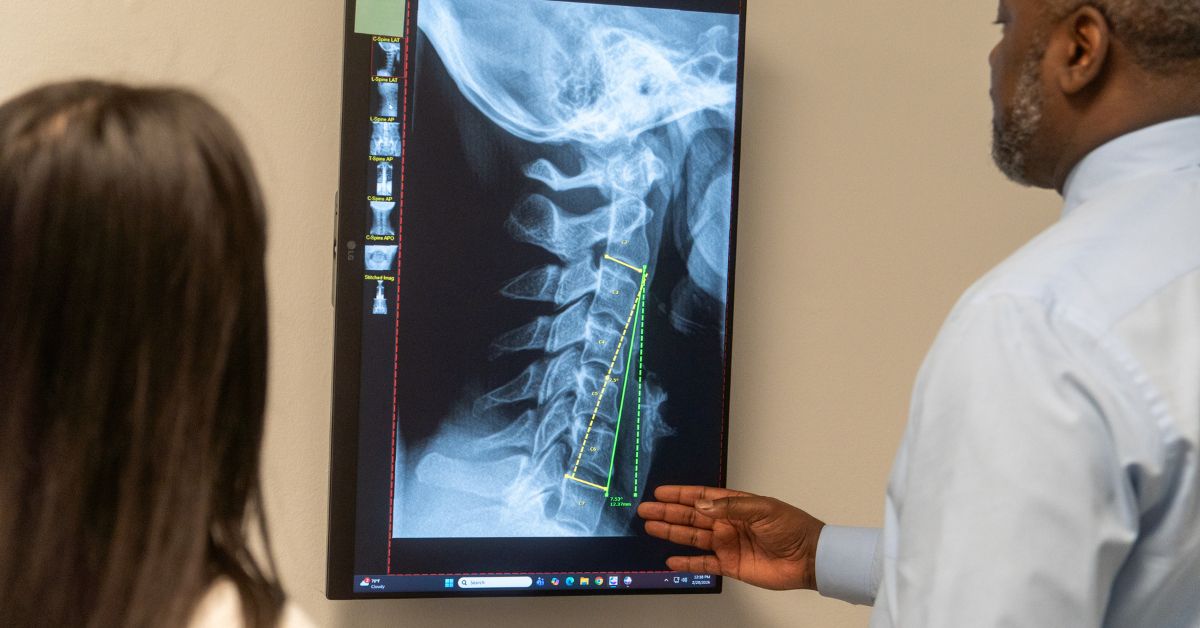
A car accident doesn't just cause pain. It shifts the foundation your spine sits on. When we take a standing leg-length x-ray, we measure any leg length discrepancy down to the millimeter, right there on the film. If one side sits low, your pelvis tilts, your spine compensates, and every adjustment you get afterward is fighting against a crooked base. We correct that discrepancy with a precise heel lift so the rest of the care actually holds. That's the difference in a nutshell.
Real-doctor diagnosis, backed by x-ray, instead of the same three moves on every patient who walks in. Once we know what we're treating, we pair the adjustments with the tools that fit your injury:
Dr. Philip Cordova has been treating accident patients for three decades, and CORE has served Houston since 2006. Houston voted us Best Chiropractor five years in a row in the Houston Chronicle's Best of the Best.
Paying for care after an accident
This is the part that stops most people from getting help, and it shouldn't. In Texas, your care after an auto accident can be covered a few different ways, and we sort out which one fits your situation before you owe anything out of pocket.
If you have Personal Injury Protection (PIP) on your auto policy, that money is set aside specifically for medical care and it pays regardless of who caused the crash. Your health insurance may cover treatment too. And if you're working with a personal injury attorney, we can treat under a letter of protection, which means we wait to be paid out of the settlement so you can focus on getting better instead of getting a bill.
We handle the paperwork on all of it, and we coordinate directly with your attorney's office so your medical records and billing line up the way they need to. If you don't have an attorney and your case calls for one, we can point you in the right direction.
There's a lot of detail here, so we put it on its own page: Paying for Care After a Car Accident in Texas walks through PIP, health insurance, and letters of protection in plain English.
Three Houston locations, same standard of care
Wherever you were hit, there's a CORE Chiropractic office nearby with the same diagnostic setup and the same doctors-first approach. You just need to choose the location most convenient for your care.

CORE Chiropractic – Galleria
1770 Saint James Place, #210, Houston TX 77056. Convenient to the 610 Loop, Uptown, and the Galleria business district. Contact our Galleria office or call (713) 622-3300.
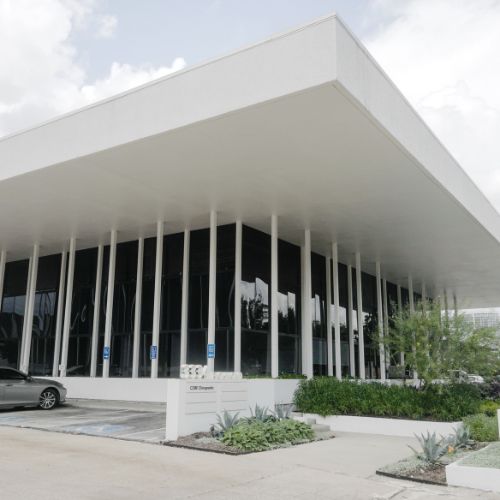
CORE Chiropractic – Greenway Plaza
3334 Richmond Avenue, #107, Houston TX 77098. Central to Greenway Plaza, Upper Kirby, & Montrose commuters. Contact our Greenway Plaza office or call (713) 929-4330.

CORE Chiropractic – Memorial City
10497 Town and Country Way, #100, Houston TX 77024. Right off I-10 for Memorial, Spring Branch, and the Energy Corridor. Contact our Memorial City office or call (713) 770-6990.
Frequently asked questions for car accident patients
As soon as you can, ideally within the first seven days and no later than two weeks. Adrenaline can hide pain for hours or days, and an exam in that first week gives you a dated record of what the crash did.
Yes. Whiplash and disc irritation often show up two or three days after a crash. An exam and digital x-rays either give you peace of mind or catch a problem while it's new.
Usually not. We bill your PIP coverage or your health insurance, or we treat under a letter of protection if you have an attorney. We verify your coverage before treatment starts.
We do, every day. We coordinate with your attorney's office on records and billing, and if you don't have an attorney yet, we can refer you to one.
You can still be treated. We document why care started later, and being seen late is far better than not being seen at all.
Usually, yes. The ER is the right first stop, because its job is to rule out emergencies like fractures and internal injuries. Once you're cleared, we look at something different: how the crash changed the way your spine moves and lines up. We take our own digital x-rays and measure your neck curve, your pelvis, and the tilt and rotation of each vertebra, so your care starts from where your spine is now. Bring your ER paperwork so your accident records stay in one place.
You choose. In Texas you can see the provider you want, whatever your insurance company or anyone else prefers.
It depends on what your exam and x-rays show. A soft-tissue strain usually settles faster than a disc or nerve injury. After your first visit you get a specific plan with a visit count and a timeline.
Ready When You Are
Don't wait for the pain to get worse. Get evaluated now, and let us handle the rest. Book your evaluation or call the location nearest you. We'll check your benefits, take care of the paperwork, and get you started, often the same day.